

4 bonus depreciation tax tips for construction firms

With IRS staff under pressure, developing internal processes and documenting fixed assets can avoid extended reviews and additional information requests, writes a construction accountant.

Getty Images
Chris Coleman is partner-in-charge of accountancy RubinBrown’s Construction Services Group. Opinions are the author’s own.
Construction companies finally got the tax break they wanted, thanks to the passage of the One Big Beautiful Bill Act. But claiming the full benefit of 100% bonus depreciation this year will depend as much on documentation and execution as on the policy change itself.
In the months since the legislation restored full bonus depreciation, many contractors have begun reassessing capital expenditure plans. Equipment purchases that were previously deferred under the phased-down bonus depreciation schedule are back on the table. Facility improvements and fleet upgrades can now generate immediate tax relief. For firms operating with tight margins and elevated borrowing costs, taking the immediate 100% depreciation can materially improve cash flow.

Following these four steps can help contractors protect the value of their bonus depreciation claims while navigating a more constrained IRS environment.
Educate yourself on the 100% bonus opportunity
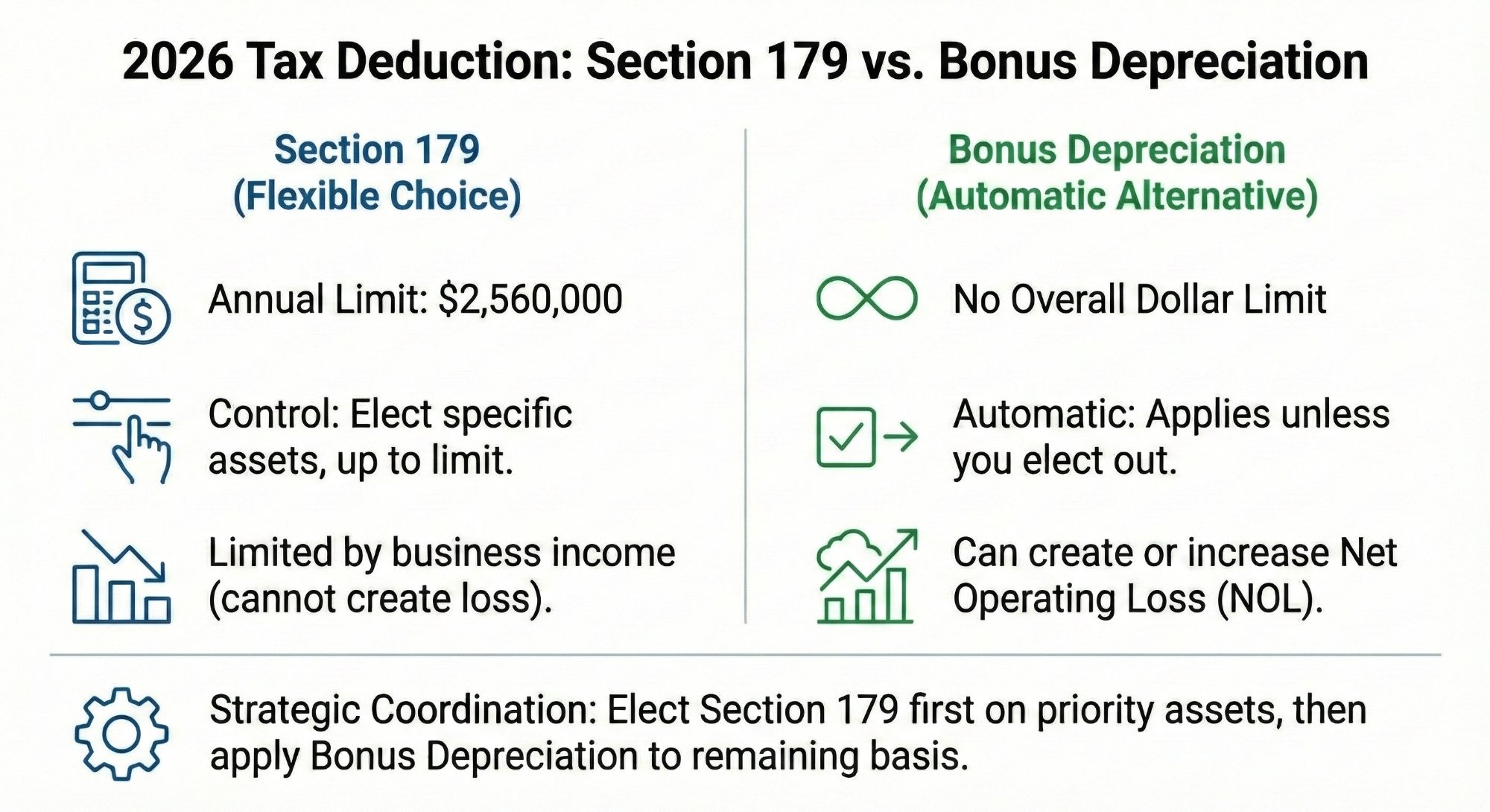
The restoration of 100% bonus depreciation was welcomed across the industry when it passed in July. The provision reverses the phase-down under 2017’s Tax Cuts and Jobs Act, which would have limited first-year deductions to 40%. Instead of spreading deductions across several years, qualifying businesses can once again deduct the full cost of eligible property in the first year it is placed in service.
For construction firms — which regularly invest in capital-intensive equipment, machinery, vehicles and facilities — the value is straightforward. The deduction amount has not changed, but the timing has. Taking the full write-off immediately reduces taxable income and improves liquidity in the current tax year.
For many firms, this deduction will directly influence purchasing decisions. Equipment upgrades that may have been deferred under a phased-down depreciation schedule now look more attractive. The policy change provides clarity and predictability that construction businesses value when planning multi-year capital strategies. It also affects internal forecasting models, since depreciation assumptions, and the after-tax cash impact, influence project pricing, capital allocation and debt covenant planning.
Factor in a constrained IRS
Since undergoing workforce reductions last year, the IRS has faced understaffing across multiple departments. That reality increases the importance of precision for construction firms planning to lean into bonus depreciation this tax season.
Fewer experienced staff available to interpret new provisions means slower responses to technical inquiries and longer timelines for resolving ambiguities. Delays in issuing formal regulations can leave gray areas unresolved. Returns that require additional review or amended filings may take longer to process, tying up refunds or creating uncertainty around final tax positions.
This environment raises the stakes for construction firms that are accelerating depreciation strategies in order to improve liquidity. When interpretive questions linger, the burden shifts more heavily to taxpayers to ensure positions are well supported and internally consistent before filing. Maintaining good documentation throughout the process is critical.
Use cost segregation studies carefully
Cost segregation planning — which allows companies to break real estate projects into components with shorter tax lives — will take on a bigger impact for companies, with 100% bonus depreciation amplifying its impact. Contractors should be aware of the significant tax benefits to building owners in this area.
When year-one expensing is available at 100%, asset classification becomes far more consequential. So-called “cost segregation studies” identify building components that qualify for shorter recovery periods, often reclassifying items that would otherwise default to 39-year or 27.5-year depreciation schedule into 15-year land improvements or even shorter periods.
Assets such as parking areas, fencing, site lighting and certain exterior improvements can therefore become eligible for immediate expensing when properly identified. The result is a significant acceleration of deductions and a corresponding improvement in after-tax cash flow — particularly for capital-intensive projects such as warehouses, manufacturing facilities and large multifamily developments.
The benefit is magnified under current bonus depreciation rules and further reinforced by new incentives including the qualified production property provision of the OBBBA. It allows certain manufacturing and production facilities to recover construction costs much more rapidly, increasing the value of properly identifying and classifying components of a project.
This is another reason why, as the tax value of accelerated deductions increases, maintaining relevant documentation is so important. Engineering-based cost segregation studies must clearly connect tax classifications to the physical components of a property and align with established IRS guidance. In an environment of constrained IRS resources but continued enforcement focus, poorly supported studies can lead to extended reviews, additional information requests or reclassification of assets during examination.
Tighten fixed-asset and process discipline
The same caution applies more broadly to fixed-asset management. As construction firms move quickly to capture the benefit of accelerated depreciation, they should ensure that their fixed-asset ledgers — lists of machinery, buildings, vehicles, etc. — are accurate and current. Obsolete or “ghost” assets lingering on the books can invite questions that slow processing or complicate filings. Cleaning up legacy entries, reconciling book and tax depreciation schedules and confirming placed-in-service dates are foundational steps that reduce risk.
Internal controls around capitalization thresholds and asset tagging should also be revisited. Clear policies on when assets are considered placed in service, how supporting invoices are retained and how cost allocations are reviewed create a defensible framework if questions arise. Establishing these guardrails before filing season reduces operational strain and strengthens confidence in reported positions.
Construction companies move quickly by necessity. In a tax season defined by administrative strain, precision carries greater weight. Firms that align documentation, asset records and internal processes will be positioned to capture the full benefit of accelerated depreciation while minimizing unnecessary exposure.
This article was originally written by Chris Coleman and appeared here.

Comment (0)